Sunday, October 19, 2008

Middelburg's Bomb and Domburg's Commandos - WWII

Domburg, Allied Commando memorial, beach landing site, the Netherlands, WWII 
 
Domburg:  in the southwest Netherlands area known as Zeeland, a peninsula. It is a seaside resort, and here is someone's fine big beach house. Commandos landed here in secret, coming in on the waves.

Imagine the people inside sometime in 1945, probably suitably dressed for the evening dinner, with no idea that - just outside, at the beach, allied commandos are landing and creeping-dash-leaping from the shadows to some meeting place (blades in teeth?) and by now just outside the door. The memorial plaque says just that: allied commandos landed here.

A midget submarine, a WWII German Seehund, was found abandoned at Domburg. See www.one35th.com/seehund/sh_operation.

Trips and memory-triggers. For us, we think of the beaches at Highlands, New Jersey. The Twin Lights. Bay Head. In WWII, drunken soldiers coming up Portland Road, interrupting our hide-and-seek around the single street light, parents hustling us in until they passed, on their way to the Twin Lights and to the pillboxes and submarine spotting stations up further, way further if they could stagger that far, up the hill.  That area along the Shrewsbury River with the ocean beyond, used to be for bootleggers, and the docks with hidden ways. Then it was war.

Middelburg-  Nearby is Middelburg, little city, big history. Quiet, traditional.  It dates from the 8th or 9th centuries, and had been a major port for the Dutch East India Company. The town is far off the regular routes.  We came to it just for the drive in remote sections, after all the urban, on our way back, after Belgium and Antwerp.  In 1940, the city was bombed by the Luftwaffe to force surrender of Dutch forces. The city is rebuilt, but archives were lost.

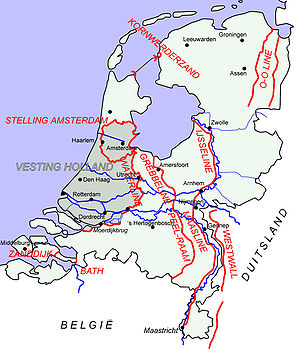
In the square is a model of a big bomb, on its end, as a reminder and memorial. This site shows "A Boy's Memories:"www.combinedops.com/Walcheren%20WW2_Memories.  Read about the Battle of the Netherlands and here is a fair use thumbnail of where Middelburg is, at ://image.absoluteastronomy.com/images/encyclopediaimages/d/du/dutch_defense_lines_-_ln-en.jpg
See
 full size image

Down there, 'way lower right, above the white of Belgium to the south.  Germany is at the other border, east. A lovely country ride. Bridges.
Etty Hillesum:  The young woman in her 20's who wrote a diary in Amsterdam during the War, and died in Auschwitz, was born in Middelburg. See the Virtual Museum at Middelburg at archimon.bravepages.com/zeeland/middelburg.

Saturday, October 18, 2008

Alkmaar - Cheese Market and Best Apartment

Alkmaar does a brisk cheese trade, but also caters to the tourists. Many photo ops.


Every Friday, as we recall. 

Alkmaar, cheese market, the Netherlands


Fridays are cheese market days - so we timed our visit to be in Alkmaar for it. The town is north of Haarlem, on the way to the big dyke, the Alfluitsdyk, across the North Sea, and do go that way. If no time, loop back to Amsterdam and Schiphol Airport.

Alkmaar's Cheese Market - see more at europeforvisitors.com/europe/articles/alkmaar_cheese_market.


Porters, Alkmaar cheese market, the Netherlands
Each of those big wheels of gouda, we were told by a porter, weighs about 13 kilograms, and at 2.2 pounds or so to a kilo, each wheel is about 30 pounds?


Color-coded cheese sleds, Alkmaar cheese market, NL


The porters are big. They have to be.  They carry the orders to the "public weigh house" on sleds, the colors matching the buyer. Here they are getting things ready, three empty sleds.


For a place to spend the night, we didn't want a regular hotel - all too far from the old town and its pedestrian mall - so went to the tourist bureau and found an address right in the old town. Most of the old town is walking only,so you have to park somewhere else and hoof. That's usual. And good for you, and why we pack so little.

World's best accommodation, Alkmaar, the Netherlands

Our spot at first look was discouraging - a large pub to one side where the overnight rental business was conducted, and since this is Holland, there is indeed overt overnight business being conducted all over.

There was an outside staircase to a second floor to rooms, and we just took it. Why not?

Indeed. It was there, and so were we.

Bonanza.

Inside was a full apartment, fresh and fine furnishings, all the comforts, and best of all, a huge jacuzzi and also a huge shower with a million heads jetting out absolutely all over. Loved it. Best apartment.

Dan's buddy the Porter.The next morning, one of the porters came in for coffee while we were at the pub next door for our breakfast, and told us all about what was to happen at the market. The lady in the picture above did a splendid breakfast and we think Alkmaar is terrific. We have no bathrooms like that here at our house. Must go back. Remember the number up by the door there and go. See what you can do when you are not on a bus?  Porters and sleds for cheeses.  Great fun for a tourist. And the town is lovely.

The city dates from the 10th century. See the history of Alkmaar at www.alkmaar.nl/portal2/pages/english/history.

Thursday, October 16, 2008

The Afsluitdijk across the sea; and Urk - Island fishing village, now on reclaimed mainland

Afluitsdijk, Commemorative sculpture to 1930's construction, causeway separating Zuiderzee from Ijsselmeer

AFLUITSDIJK

Dykes are everywhere; the largest is the Afsluitdijk in the northern area, finished in the 1930's. It is a 20-mile causeway to Friesland province. It holds back the North Sea (Zuiderzee inlet) from the fresh water lake, Ijsselmeer. Not clear what was saline or not before the dyke, but it appears that it was also saline but not sea-water strength. See the size of it in Afluitsdyk photos at outdoors.webshots.com/album/552587230IKkFdP. The major highway across the dyke is close to sea level - 7-9 meters.

It has sluices that flush in and out to maintain the salt that is in the Ijsselmeer, for ecological reasons; and to adjust for storms. Would Mississippi benefit from the technology? It is a matter of will, not way.

URK- The Island that is now a peninsula

The effect of the dykes, especially the Afluitsdyke and overall reclamation, has been to turn islands into towns on the mainland.

Urk Island Lighthouse, now inland (land reclamation), the Netherlands

Urk had been a remote fishing village, isolated on its own island, in the Ijsselmeer, east coastal area. With the large Afsluitdijk, the causeway across the northern Netherlands, now across from North Holland to Friesland, land is being reclaimed.  Urk, that once was an island with its lighthouse, is now mainland. The lighthouse at Urk is listed at www.lighthousedepot.com/database/uniquelighthouse.cfm?value=2140.

Urk dates from the 900's. See the history of Urk at www.answers.com/topic/urk. One of the oldest Dutch dialects is spoken there. See Urk overview at experts.about.com/e/u/ur/Urk.

Much of the land that had been underwater is now agricultural land. Wikipedia has a comprehensible writeup on these polders at en.wikipedia.org/wiki/Polder.


Tuesday, October 14, 2008

Amersfoort - Wall House and Amsterdam Tiny Town House

Amersfoort, city walls, the Netherlands

Amersfoort is near Utrecht, and the old defenses are still there, with houses built into the city walls. This old fortress section has the narrow windows needed for defense, with just enough room for bows and arrows. See fine photos and history at home.planet.nl/%7Emuije000/Amersfoort/index.

There is a large pedestrianized mall in the old town, as is often found, and a large hurdy-gurdy playing.


Houses squeezed in places:  In Amsterdam, see post,  a canal boat tour narrator claimed that this is the world's narrowest house, squeezed between larger neighboring town houses - and we were told it is narrow for tax reasons. Citizens were taxed based on frontage, not depth. I understand the owner makes many euro on tours. Location, location.

Wednesday, July 09, 2008

Haarlem - Grote Kerke, Corrie ten Boom, Frans Hals

Corrie ten Boom House, Interior, hiding place, Haarlem, the Netherlands

The Corrie ten Boom house, on the left, is another home where people hid during WWII, this time in the walls, but for a vastly shorter period of time than The Anne Frank family in Amsterdam (a week, if even that?). Details about CTB's life and the house are at www.corrietenboom.com/.

Some 800 Jews were saved in this way, see New York Times article by Beth Greenfield, Classic Dutch City With A Village Feel, at ://travel.nytimes.com/2009/07/19/travel/19dayout.html?partner=rss&emc=rss/

 There is the space within the walls for hiding.

Finally, when word got out, the Nazis were in and out, searching for them, and during that week, the stakes for the ten Boom family were just as immediate and dire as for the Franks, hidden in Amsterdam.

Corrie and the others did escape, over the roofs. Here is a conflict of information:  We were told that the family escaped, but the NYT article says they were caught, sent to concentration camps, and Corrie survived.  We are checking now.  Perhaps the museum information was only for a particular search week.
Plan much time for this stop, if you have it - the tour (you cannot go through on your own) is lengthy. There are compulsory sectarian promotions for up to an hour before you can get in the rest of the house. You cannot go through on your own, to speed things up if you are not interested in the motivational speakers.

Also, to accommodate the lectures, the doors only open at certain times.

Be there on the spot. Doors close. The article expressed surprise that people were already milling about the door at 2PM.  That is because people are only allowed in on the dot of the hour, and nobody during lunch.

I did read some of Corrie Ten Boom's writings, and they are pensive, human and insightful. The house presentation, however, tends to defeat that. Too forced and evangelical, for me. They want to proseletyze.


The Bavo Church, the Grote Kerke;  St. Bavo Kerke - Kerke=Church.

The Grote Kerk. It is named after Saint Bavo, who turns out to have been an abuser --  of his wife and family and servants in the 6th Century.  He converted, but that means, at that time, that he gave up the worldly life and entered a monastery, not that he became Christian.  Doctrines were in flux. Apparently he heard a particularly moving sermon by missionary and cleric St. Amand, see Amand at ://www.catholic.org/saints/saint.php?saint_id=333. 

Bavo ended up a hermit in a forest near Ghent, Belgium. See ://www.aug.edu/augusta/iconography/bavo.html/  Saint Bavo the Abuser.

In the church is a large Foucault Pendulum setup, after the experiment in 1851 by Foucault to show the earth's rotation. It does, has, is ongoing, for your peace of mind on that issue. See ://www.travelpod.com/travel-blog-entries/yearoftheshorts/1/1268469287/tpod.html/.  And three ship-model chandeliers, and a painted carving of a little fellow gnawing on a pew. 

See him to the left, head tilted for a better bite. And there is a fierce snarling thing beside. Love religion. Woodworkers' revenge.  The choir was built in about 1400, see ://www.nationalgallery.org.uk/paintings/gerrit-berckheyde-the-interior-of-the-grote-kerk-haarlem/.
 
.
St. Bavo, Grote Kerke, Haarlem, the Netherlands, figure gnawing on pew, interior carving
.
Vestries always have difficulties?

There also is another carving of a little fellow beneath the seats in the choir reserved for the wealthy - everyone else had to stand in the lower area. Is he really showing his disdain for the bottoms of his betters seated above him, by showing his below? Where is that picture? Am sure I got it.

Frans Hals is buried at the Grote Kerk. For the interior, see ://www.nationalgallery.org.uk/cgi-bin/WebObjects.dll/CollectionPublisher.woa/wa/largeImage?workNumber=NG1451&collectionPublisherSection=work/.

Haarlem's service for you ladies' District is low-key, clean, neat and tidy, and professional. It is near the main square, where the Grote Kerke is located. If you stroll by in the morning, the windows may well be empty and you can look at the chairs and props better. Tableaux. See before you buy.

The Frans Hals Museum is also there, but a longer walk away. Take time for the stroll.  Haarlem was Frans Hals' home, at least for a substantial time. For his paintings, see ://www.abcgallery.com/H/hals/hals.html, Olga's Gallery.

Sunday, December 30, 2007

Amsterdam - Street Karaoke - and a site, Photo Gallery

Street karaoke, gender yes, Amsterdam, the Netherlands

Amsterdam is a relaxed and livable city. Outdoor cafes, bikes and more bikes. Karaoke - the gentleman in the boots was very talented - much applause from all of us. This was near the Anne Frank House.

Here is a fine photo gallery for Amsterdam: www.pbase.com/bauer/amsterdam.

More blogs about The Netherlands Road Ways.

Amsterdam - Coffee House (not coffee); and the District

Recreation at will, so long as someone does not interfere with someone else. Users tolerated, dealers, not.  Focus on the regulation, the sources.  Monitoring, safety, health measures, not prohibition.

Users have access to soft drugs at controlled settings, free of contact with the hard users or dealers; such as at this "coffee house."  Users are not the target,  but producers and dealers are. Hard drugs are considered an unacceptable risk to society, but the softer ones not so.
Distinction between soft and hard drugs.

Here is a coffee house - remember that the name does not mean that coffee is sold there. It is a recreational substance establishment. All is relaxed about people's personal choices. A person is free to be responsible for himself, users are tolerated, pushers are not. We missed the Hash Museum. See www.hashmuseum.com/.

One of the sculpture lions outside the Rijksmuseum even had a joint in its mouth. Looked perfectly happy.

Hemp has been used for medicinal and other purpose for centuries - maybe the first reference is 8000 BC in Mesopotamia. For details on various categories of uses, see www.sdearthtimes.com/et0199/et0199s11. Examples: rope, materials for the Dutch sailing and shipping industries.

And in the District, many people are friendly, and wave from the windows when they get bored or just want some fun, and business gets conducted without the tawdry desperation we see here. Join the profession, leave, as you like. Other in the windows just are there, looking bored or tired. If she contracts an illness, I understand, she must stop and can take retirement with treatment and at subsidized housing. True? Regulation rather than prohibition? Up to the Powers, but information always helps. Check out your own.

How do we know this? Because we were going to church. This one.

We were going to the Museum Amstelkring - and it is in the District. It is an example (now museum) of a hidden church, necessary for the Roman Catholics when Catholicism was outlawed in the late 16th century. The church is splendid -- on a second and third floors of a house, spreading over two widths at those higher levels. The sanctuary is two floors high. See ://www.bma.amsterdam.nl/adam/uk/huizen/ozvb40i.html/ for Our Lord In The Attic.

We would have walked around the District anyway.

And in the District, many people are friendly, and wave from the windows when they get bored or just want some fun, and business gets conducted without the tawdry desperation we see here. Join the profession, leave, as you like. Other in the windows just are there, looking bored or tired.Some of the best-humored seemed to be the older purveyors - friendly waves. With skills, they can continue for years: just pay the rent. Far less fear for everyone on the street, including the pedestrians. See ://www.answers.com/topic/prostitution-in-the-netherlands/

Amsterdam - Canal ice cream, houseboats, parking

Heron on houseboat, Amsterdam NL

That is a heron on the houseboat. Houseboats can be rented by the week. Prime real estate.

Watch for the canal take-out.

On this canal, we saw a family pull up while still in their little outboard motorboat, ring the brass bell and out cames a waiter to take their ice cream order. Dash back in and presto - cones for all. Houseboats are becoming pricey, I understand - best non-real estate deal around.

Houseboats, canal, Amsterdam, NL


The canals are lined with houseboats.


Boat-it over for ice cream, canal scene, Amsterdam, the Netherlands


Houseboat row, Amsterdam, the Netherlands


Parking is hold-your-breath. The cars just roll right in all the time. Parking is usually at an angle, to maximize space. And to facilitate the big splash. The authorities have special car-retrieval equipment.

There are also large underground garages.

Most areas along the canals are limited to residents who display a parking permit. So head for the underground lots. When finding a place to stay, it is best to find the garage first, in an area with some hotels, then park and find a nearby hotel. Mark a map where your hotel is, and write out the cross-streets. Easier to ask directions back.

Saturday, December 29, 2007

Amsterdam - Big-As Life Chess, Sandlot Soccer - City Block size

Life-size chess board, Amsterdam

On the big chess board, White was winning.

This approach to chess is not unusual in Europe. Find one in Salzburg, other places. 


For the soccer, there was an entire half-city block full of sand - no dogs allowed - and it was soccer each time we went by.

City block-size sandlot soccer, Amsterdam, the Netherlands

Update July 3, 2010 - The World Cup Soccer in South Africa is going on, and the Netherlands just beat Brazil, see ://netherlands.worldcupblog.org/

Other countries:  clear sandlots and watch the pickup games pick up. Is that so? soccer sandlots as feeders for champion teams.  Make it a part of everyday life.

How about the Bronx next?

Also see street soccer in Dubrovnik.

Wednesday, December 19, 2007

Non-Romanticizing Any Country - Amsterdam, The Death of Theo Van Gogh

Theo Van Gogh
Immigration, Tolerance, Intolerance, How to Survive Together

Van Gogh had made a film in the Netherlands that offended a particular Islamist because of the film's depiction of treatment of women, among other issues. There are now about a million Dutch-born Muslims in the Netherlands - of a total population of about 16 million. He was murdered on November 2, 2004 in Amsterdam, for producing the film.  See a chronology of news accounts and links at ://www.religionnewsblog.com/category/theo-van-gogh/  He was the great-great grandson of the brother of Vincent Van Gogh, also named Theo. See ://www.imdb.com/name/nm0324660/

Travel leads to post-trip interest in the country's political, social, religious events and climate. The issue of global immigration and conflicting religious views leading to violence is historically familiar, whether Christian or Islam, see Originalism and Literalism v. Reason and Practicality. Throughout the world, see the clash of intolerance of self-determination deviation and tolerance for self-determination. The murder of Theo Van Gogh highlights its modern form.  See the book Murder in Amsterdam, The Death of Theo Van Gogh and the Limits of Tolerance, by Ian Buruma, reviewed by Christopher Caldwell in the New York Times, 9/20/2006 at page 8.

Philosophy, tolerance, the place of newcomers, and what if the newcomers are physically aggressive about their cause, the the old-timers use language and political processes.  These are global issues.

There is an active counterculture, and no resolution in sight.

The issue fosters a deadly earnestness about oppositions. Extremes east and west, not limited to any particular framework.  Moderates are in each.  Sing of moderation.

Hwaet. Listen up. See Beowulf's bard being sure he has people's attention before telling his tale at ://www.fordham.edu/halsall/basis/beowulf-oe.html/

See
 full size image

Theo Van Gogh. Do an Images search - fair use thumbnail, see userstelenet.be. One of many. Beware the hate sites disregard the obvious: that extremes do not speak for the middle and that Christians have engaged in purges of others also, and some still do.  See Scott Roeder at ://www.nytimes.com/2010/01/30/us/30roeder.html